
📞 CALL OR TEXT:
213-999-8966

By Herbert Zhu | A Colored Mind Wedding Films

Millwick is one of those Los Angeles wedding venues where the surroundings can become part of the storytelling. Located in Downtown Los Angeles, the venue combines a darker industrial interior, greenery, natural light, and the streets of the arts District just outside.
I filmed Amelia and Maria’s wedding here, and what I remember most is not simply the appearance of the venue. It is how many creative ideas developed while I was filming and how some of the strongest moments in their final wedding film came from a combination of preparation, improvisation, editing, and a little bit of luck.
As a Los Angeles wedding videographer, I had opportunities at Millwick to experiment with cross-cutting, sound design, silhouettes, street footage, and a planned sunglasses sequence that I had already imagined before the wedding day.
One thing I particularly like about this film is that some moments appear spontaneous while others were carefully designed beforehand. In the final edit, those two approaches work together.
For me, that is an important part of wedding filmmaking. I don’t want everything to feel staged, but I also don’t want to simply point a camera at whatever happens. Sometimes I observe. Sometimes I improvise. Sometimes I plan something before the wedding. And sometimes the real storytelling happens later in the edit.
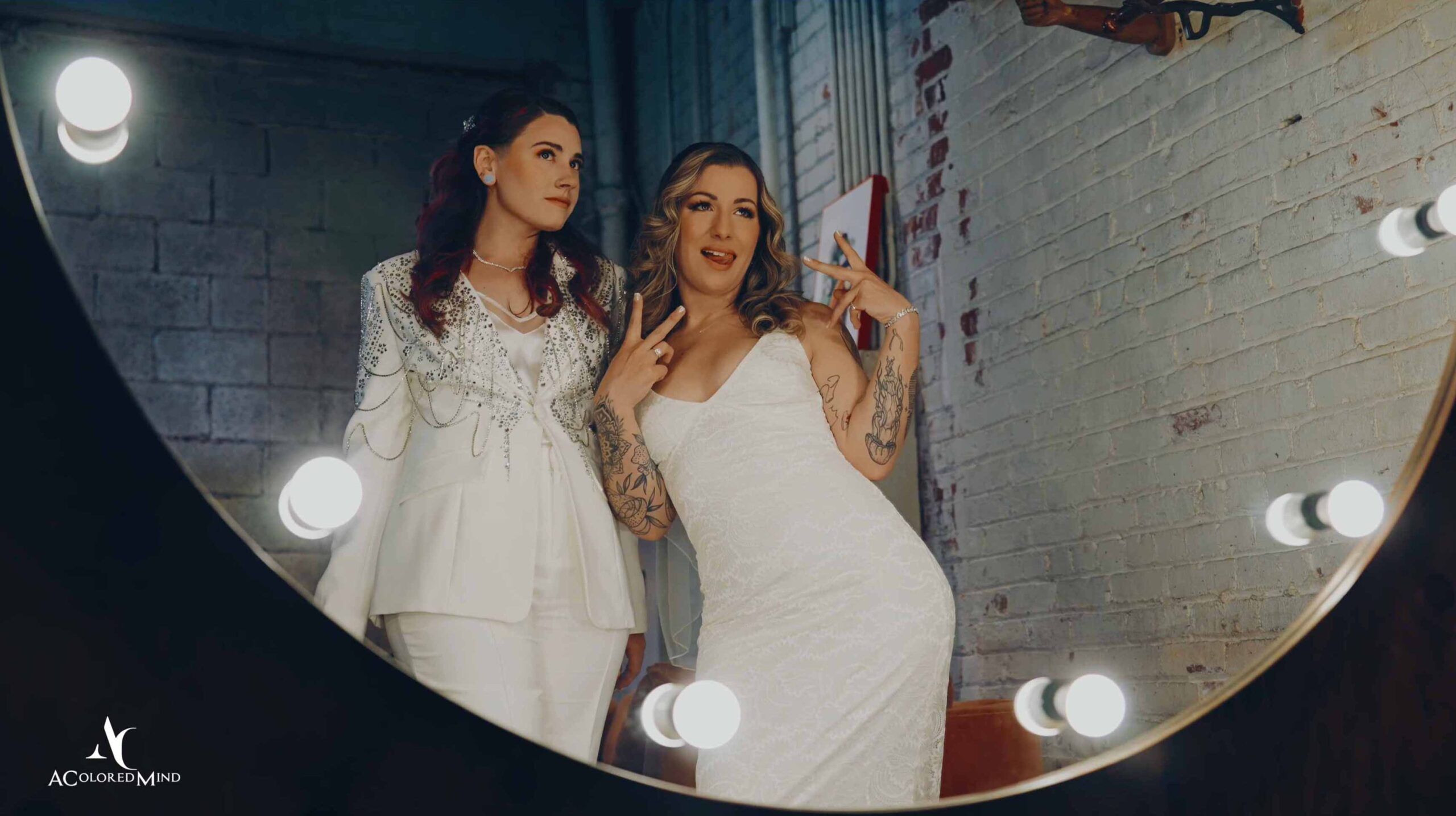
What makes Millwick interesting to me is the contrast. You are in the middle of Downtown Los Angeles, surrounded by streets, warehouses, murals, traffic, and that unmistakable Arts District environment. But once you step inside the venue, the atmosphere changes. There is greenery, warm natural texture, an outdoor courtyard, and a darker industrial interior.
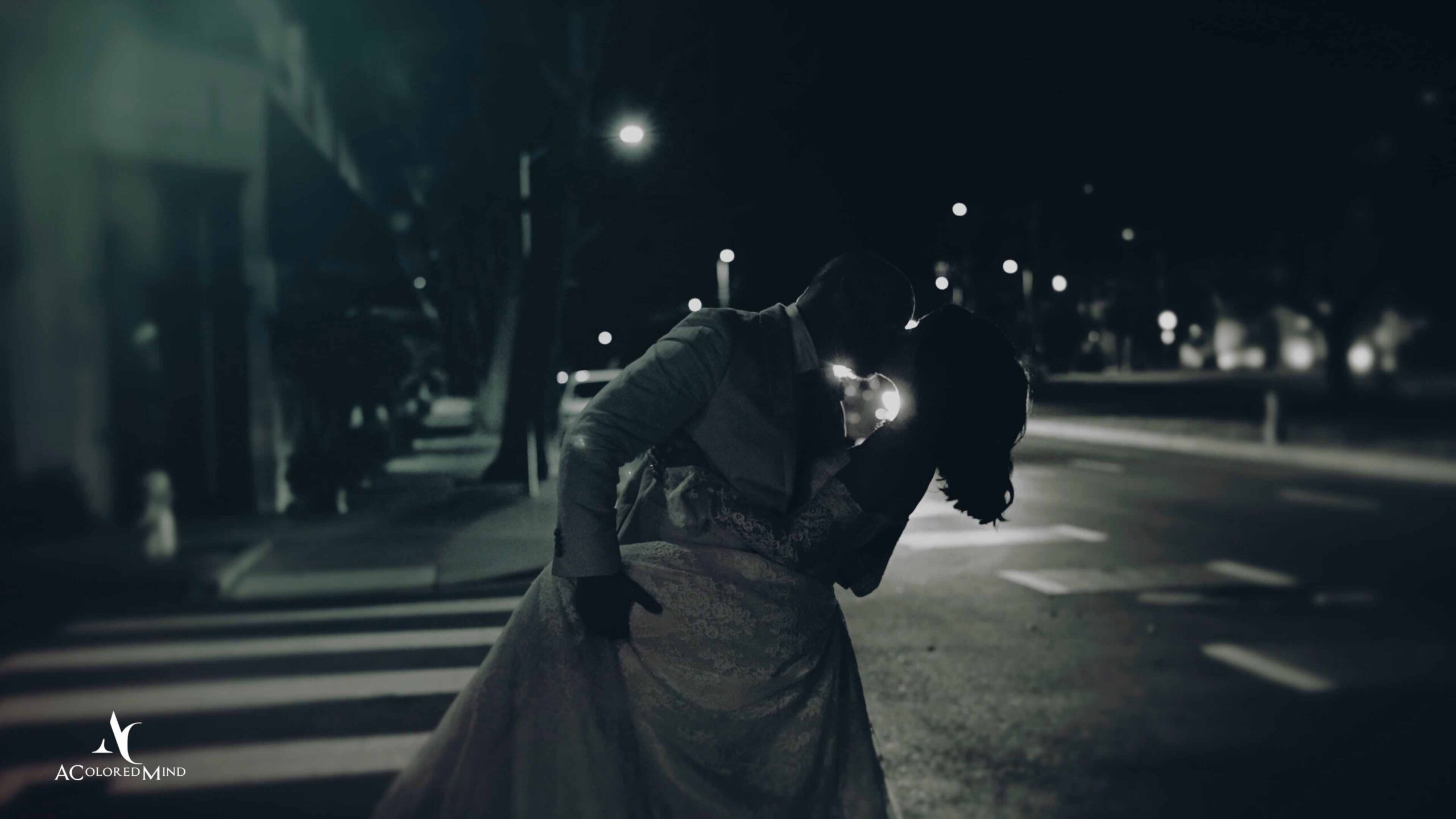
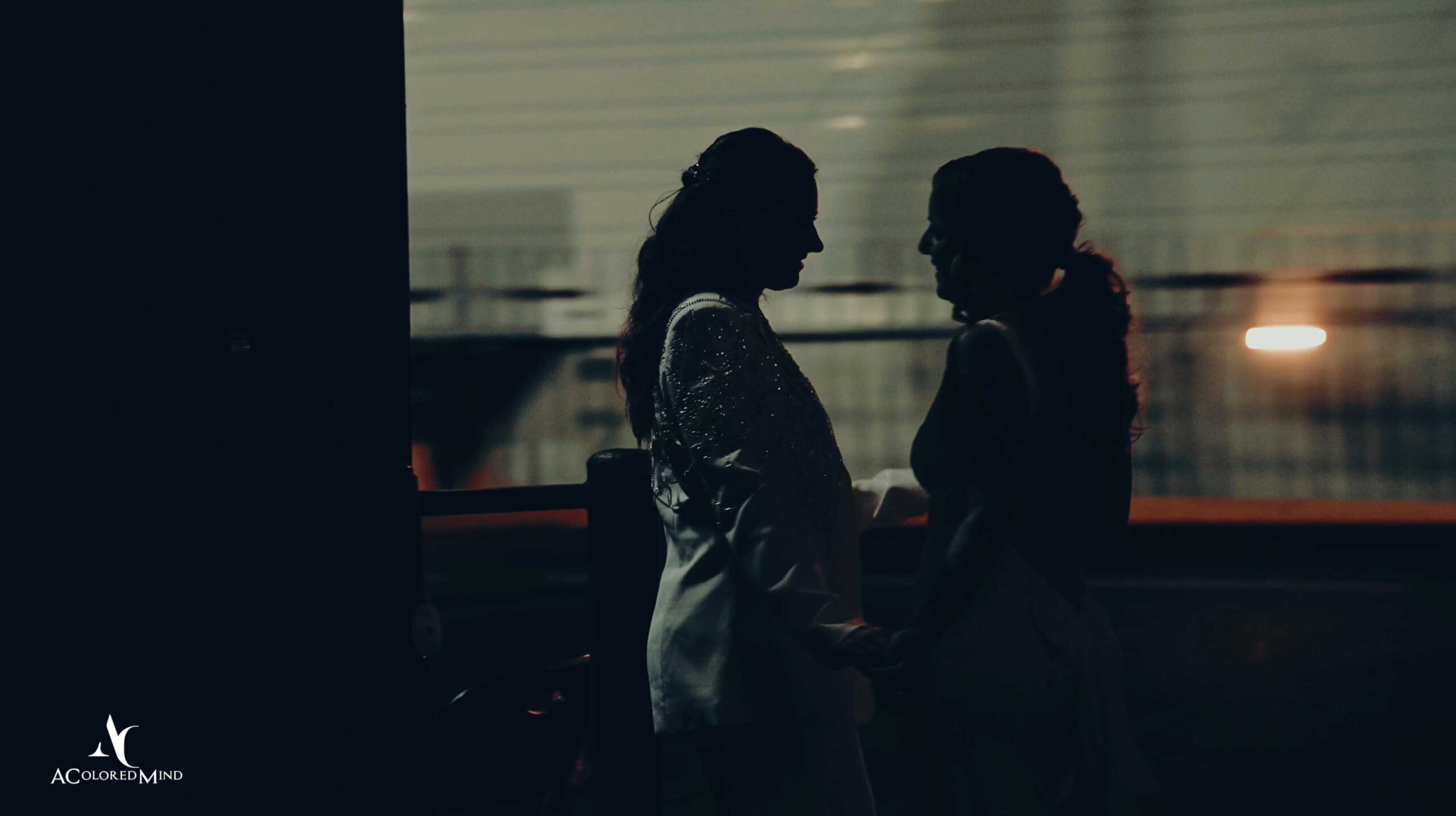
That combination gives me very different environments to work with without having to travel anywhere else. As a filmmaker, I especially like the transition between the darker interior and the brighter courtyard and exterior. That contrast is what gave me the idea for the silhouette shot in Amelia and Maria’s film. I was standing inside during the afternoon, looking toward the brighter exterior, and immediately realized that if I exposed for the outside light, I could let the couple fall almost completely into silhouette.
Millwick’s Garden Courtyard and Grand Hall are also directly connected by large glass doors, so the wedding can move naturally between indoor and outdoor spaces. For filmmaking, that means the visual atmosphere can change very quickly while everything still feels like part of the same venue.
I also think the surrounding Arts District is part of what makes Millwick unique. I wouldn’t limit portraits to only the beautiful areas inside the venue. Taking the couple outside gives you murals, city streets, industrial backgrounds, passing cars, and sometimes completely unexpected moments like the truck that happened to pass behind Amelia and Maria while I was filming them.
For me, Millwick works best when you embrace both sides of it: the greenery and intimacy inside, and the raw Downtown Los Angeles environment right outside the door.
When I film couple portraits at Millwick, I usually start by studying the environment instead of choosing a pose first. I look for doorways, plants, murals, shadows, industrial textures or movement on the street that can help shape the frame. Once I find something visually interesting, I decide where the couple should stand, walk, or interact so they feel naturally connected to the space rather than simply placed there.
Because I use a gimbal for many of these moments, I often design the shot around a path instead of a fixed composition. The movement should connect one visual idea to another. I might begin behind greenery, move through a doorway, and reveal the couple outside. Another time, I could start with them inside and continue toward the courtyard, mural, or street beyond. That way, the camera movement introduces both the couple and Millwick instead of moving only for style.
Millwick gives me many options for this because its character changes quickly between spaces. The darker interior, courtyard greenery, glass doors, Arts District murals, industrial walls, and surrounding streets create visual layers I can use as foregrounds, transitions, or destinations within one continuous moving shot.
I think of each movement as a journey through the venue. Sometimes the couple appears immediately; other times the environment leads to them as the final reveal. What matters is that the camera has a clear purpose. By connecting the couple with Millwick’s textures and surroundings, the shot feels intentional and specific to the place.

At the beginning of Amelia and Maria’s film, I used a storytelling technique called cross-cutting. The film moves between the two brides outside Millwick talking, kissing, dancing and having quiet moments together and a performance happening inside the venue, where everyone is singing.
When you watch the finished sequence, it feels as though these two things are happening simultaneously: an intimate moment between the couple outside while the celebration continues inside. But they weren’t happening at the same time.
The couple had also been inside during the performance. I intentionally rearranged the chronology during editing so the two scenes could play against each other.
That is one of the differences between simply documenting a wedding and creating a wedding film. I am still using real moments from the wedding day, but editing allows me to control rhythm, emotion, and perspective instead of always presenting everything in strict chronological order.
The contrast also worked visually. Inside, there was a room full of people, music, and movement. Outside, suddenly it was just Amelia and Maria together. That contrast made their connection feel more intimate.
One of my favorite little moments happened completely by accident. While I was filming Amelia and Maria outside Millwick, a large truck happened to drive through the background. There was no planning involved. It simply passed through the frame at exactly the right moment.
When I edited the film later, I added the sound of a truck horn. The truck did not actually honk when I filmed the shot.
Normally I am careful about preserving the real audio and emotion of a wedding, but this was a small piece of sound design used for personality rather than to change the meaning of an important moment.
In a city environment, it also felt believable. When people see a newly married couple walking down the street, a friendly horn can almost sound like someone saying, congratulations. Adding that sound made an already lucky visual moment feel a little more alive.
This is something I enjoy about filming weddings in Downtown Los Angeles. You cannot control everything around you and sometimes you shouldn’t. Traffic, architecture, pedestrians, reflections, murals, and unexpected movement can become part of the visual story.
Sometimes the best thing a filmmaker can do is recognize the opportunity quickly enough to capture it.

Another shot in the film was completely improvised. Around 1:30 or 2:00 in the afternoon, I was standing inside Millwick looking toward the exterior and noticed the difference in exposure between the darker interior and the bright daylight outside.
Immediately, I thought this could become a silhouette.
Later, I positioned Amelia and Maria there and filmed them holding hands and walking toward the exterior. You can see the shot at approximately 2:20 in the wedding film.
I exposed manually for the brighter exterior, intentionally allowing the couple to become dark silhouettes against the light.
There was nothing complicated about the setup. The important part was simply noticing the light.
I had not planned the shot before the wedding. I hadn’t seen exactly how that location would look at that time of day. It developed from walking through the venue, looking at the light, and imagining what I could do with it.
That type of improvisation is a major part of the way I film weddings.

The silhouette is also a good example of something I have learned from filming weddings over the years: the best shot isn’t necessarily at the most obvious portrait location.
A beautiful venue certainly helps, but I am constantly looking at smaller things, doorways, reflections, shadows, foreground objects, changes in exposure, movement in the background, or even traffic passing outside.
Millwick gave me a particularly interesting combination because I could move between its darker interior and the much brighter exterior.
Instead of fighting that difference in exposure, I used it.
For me, that is often where creative wedding cinematography begins: not asking how to make every location look the same but asking what is unique about the location in front of me.

After I had captured enough footage on the dance floor, I went outside with my camera to look around. By then it was already dark. I stood near the entrance of Millwick and looked across the street, where I noticed some interesting lights in the distance.
Immediately, I thought those lights could become a beautiful background if I placed Amelia and Maria near the gate and filmed them from inside the venue looking toward the street. The couple would stay relatively dark while the streetlights created depth and color behind them.
That became one of the shots you see in the beginning of the wedding film. Like the silhouette shot earlier in the day, it was not something I had planned before the wedding. I simply walked outside, looked at what the environment was giving me and imagined how I could use it.
This is another reason I like leaving myself a little time during a wedding to explore. Once I know I have enough coverage of an important part of the day, such as the dance floor, I can step away briefly and look for something different. Sometimes a location that seems ordinary during the daytime becomes much more interesting after dark.

Not everything in Amelia and Maria’s film was improvised. One of the final sequences was planned before their wedding.
Before the wedding day, I asked them if they were bringing any props or anything personal that we might be able to incorporate into the film. They told me they had sunglasses.
That gave me an idea.
I imagined each bride holding her sunglasses, putting them on on cue, and then looking toward the other bride. During filming, I counted them in 3, 2, 1, go and captured the movement individually.
One bride looked in one direction. The other looked in the opposite direction. I filmed them separately rather than performing the action together in the same frame.
In post-production, I combined the two shots so that it feels like they are looking toward one another at the same moment.
Technically, this is closer to a split-screen/composite with matched eyelines than traditional cross-cutting. But the important thing isn’t the terminology. The purpose was to create a playful visual interaction between them that could only exist in the finished film.
Afterward, I filmed them putting on their sunglasses, holding hands, and walking together through the street. That became a natural ending to the sequence.

From a filmmaking perspective, one thing couples should understand about Millwick is that the lighting can change significantly as you move between the courtyard, Grand Hall, and the streets outside.
I see that as a creative advantage, but it does mean your photographer and filmmaker need to be comfortable adjusting quickly between very different lighting conditions.
I would also recommend leaving some time for portraits outside the venue. Millwick itself has plenty of interesting locations, but the arts District gives the wedding another visual layer. Some of my favorite footage from Amelia and Maria’s wedding came from simply walking outside with them and using whatever was happening around us.
At the same time, Downtown Los Angeles is unpredictable. Cars, trucks, pedestrians, street noise, and other activity may enter the background. Instead of trying to eliminate all of that, I sometimes prefer to incorporate it into the film when it feels right. The truck passing behind Amelia and Maria is a perfect example. It wasn’t planned, but it became part of the personality of the final sequence.
Another consideration is timing. Because the light changes so much throughout the day, a location that looks ordinary at one time can become much more interesting later. The silhouette shot I created around 1:30 or 2:00 p.m. only happened because I noticed the relationship between the darker interior and the bright exterior at that moment.
That is why I usually prefer having enough flexibility in the timeline to explore rather than scheduling every portrait down to the minute.

After filming Amelia and Maria’s wedding, the biggest lesson I took away from Millwick is that you shouldn’t limit yourself to the obvious beauty of the venue.
The greenery and architecture are already there. Everyone with a camera can photograph those things.
What interested me more were the opportunities created by the venue and its surroundings: the dark-to-bright transition that became a silhouette, the Downtown LA street that gave me the passing truck, the indoor performance that I could contrast against quieter footage of the brides outside, and the space to experiment with a pre-designed sunglasses sequence.
For photographers and filmmakers, I think Millwick rewards curiosity.
Walk around. Look through doorways. Watch how the light changes. Pay attention to what is happening outside the venue as well as inside.
And when something unexpected enters the frame, don’t automatically assume it ruined the shot.
Sometimes that truck driving through your background becomes one of your favorite moments in the film.

The sunglasses sequence and the silhouette shot represent two completely different ways I approach wedding filmmaking.
The sunglasses idea started before the wedding. The silhouette idea happened during the wedding. The cross-cutting happened after the wedding in the edit. And the truck was simply luck.
All four ended up becoming part of the same film.
That is why I don’t think wedding cinematography should be completely documentary or completely staged. The strongest films usually contain a combination of both.
Preparation gives me ideas and possibilities. Improvisation allows me to respond to the actual wedding day. And editing gives me another opportunity to find relationships between moments that I may not have recognized while filming them.
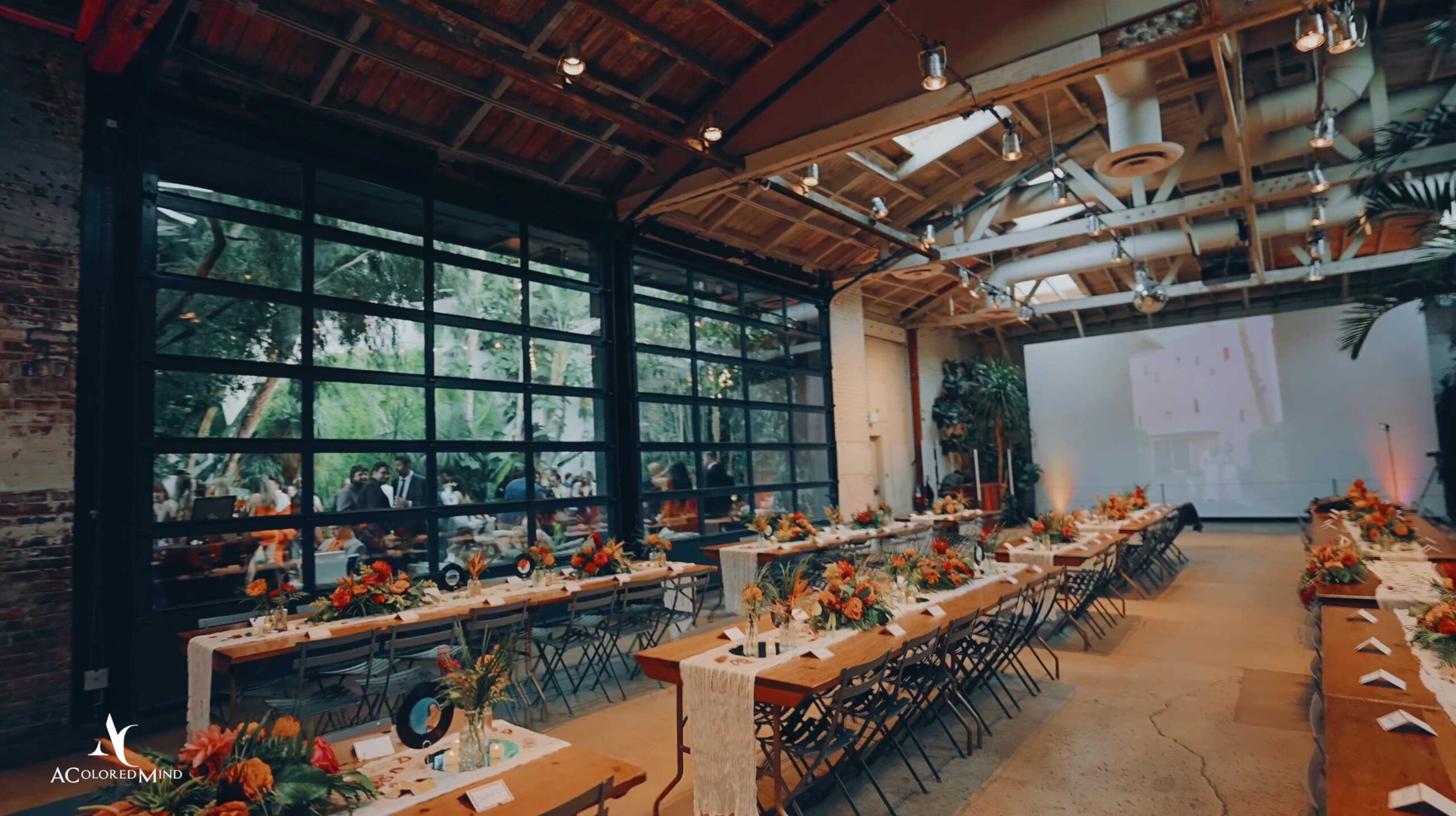
The reception was one of my favorite parts of Amelia and Maria’s wedding because of the energy in the room. Their guests were not simply standing around the dance floor watching. Once the dancing started, people really participated. There was singing, dancing, interaction, and a lot of personality throughout the room.
For a wedding filmmaker, that kind of reception is incredibly valuable because I am not only filming people dancing. I am looking for reactions between friends, people singing together, unexpected expressions, hugs, laughter, and all the little interactions that show what the celebration felt like.
Millwick’s Grand Hall also has a very different visual character from the courtyard. The interior is darker, warmer, and more intimate, which creates a natural transition from the brighter daytime portion of the wedding into the reception.
I personally like that change. I don’t necessarily want every part of a wedding film to have the same lighting or atmosphere. The contrast between the outdoor ceremony and portraits, the darker interior, the performance, and the energetic dance floor helped give Amelia and Maria’s film different visual chapters.

One other thing that really stood out to me about Amelia and Maria’s wedding was the dance floor. Nearly everyone seemed willing to participate. People weren’t standing around the edges watching. They were dancing openly, interacting with each other, laughing, and bringing a lot of personality into the room.
The energy felt unusually free and communal.
I have filmed many kinds of weddings, including LGBTQ weddings and every group is different, so I wouldn’t say that one type of wedding automatically has more energy than another. But this celebration absolutely did.
As a filmmaker, that makes a huge difference. When guests allow themselves to be expressive, I can capture far more than dancing. I can capture relationships, friends reacting to each other, people singing together, unexpected expressions, movement, laughter, and the atmosphere of the room.
Those moments ultimately tell you what it felt like to be there.

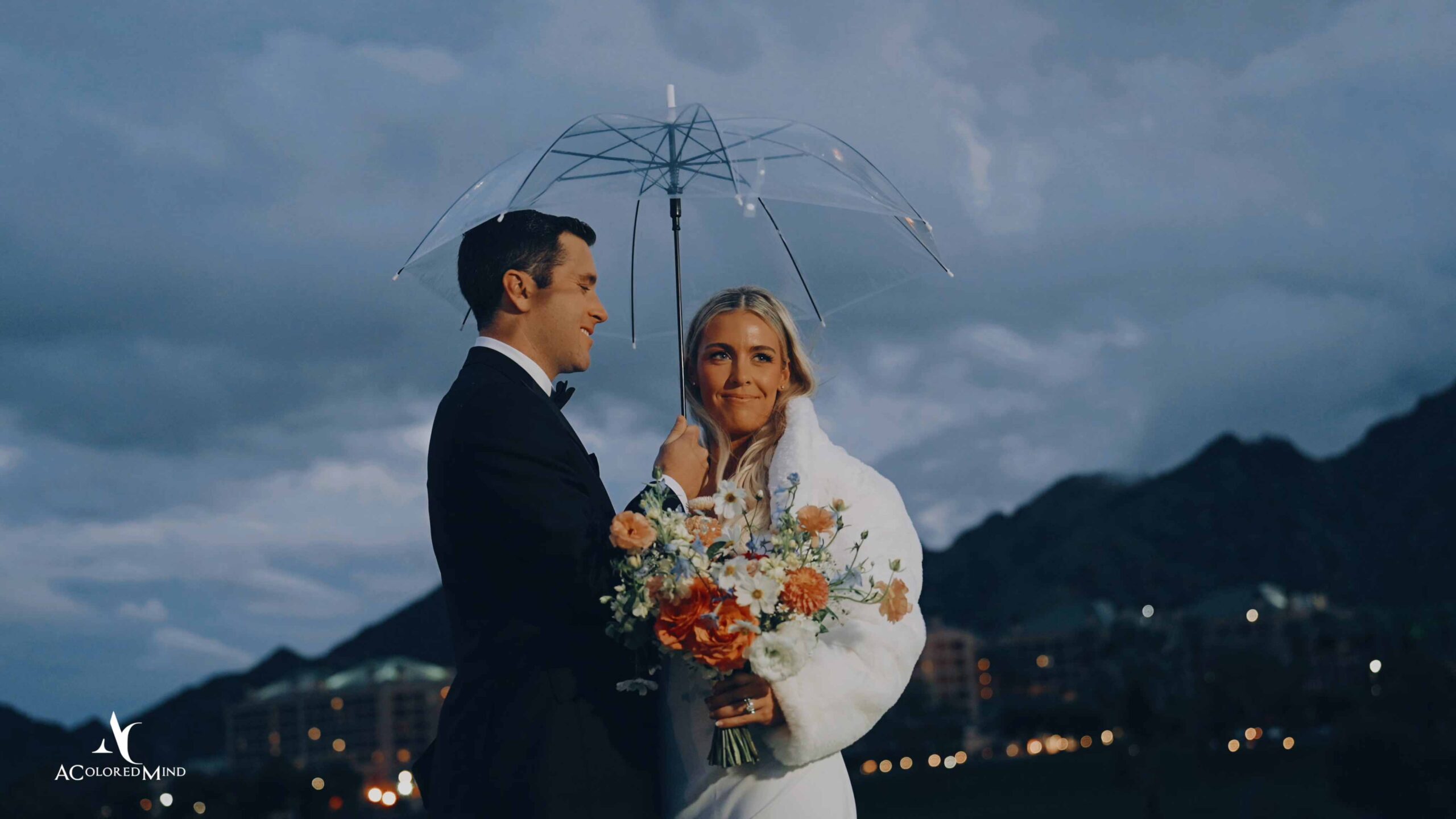
Shelby and Raphael’s wedding day brought together two distinct Southern California settings. After an intimate outdoor ceremony at Coyote Hills Golf Course, the celebration continued at Millwick in Downtown Los Angeles. Surrounded by lush greenery, exposed brick, and warm industrial details, the reception came alive with heartfelt speeches, joyful moments, and an energetic dance floor. Their wedding film captures the transition from a romantic garden ceremony to an unforgettable evening celebrating with family and friends.
If you are planning a wedding at Millwick, my biggest filmmaking advice is simple: leave a little room for creativity.
You do not need to schedule every portrait or decide every shot before the wedding. A few planned ideas are helpful especially if you are bringing something personal like sunglasses, jackets, champagne, or another simple prop, but some of the most memorable footage can come from what happens naturally on the day.
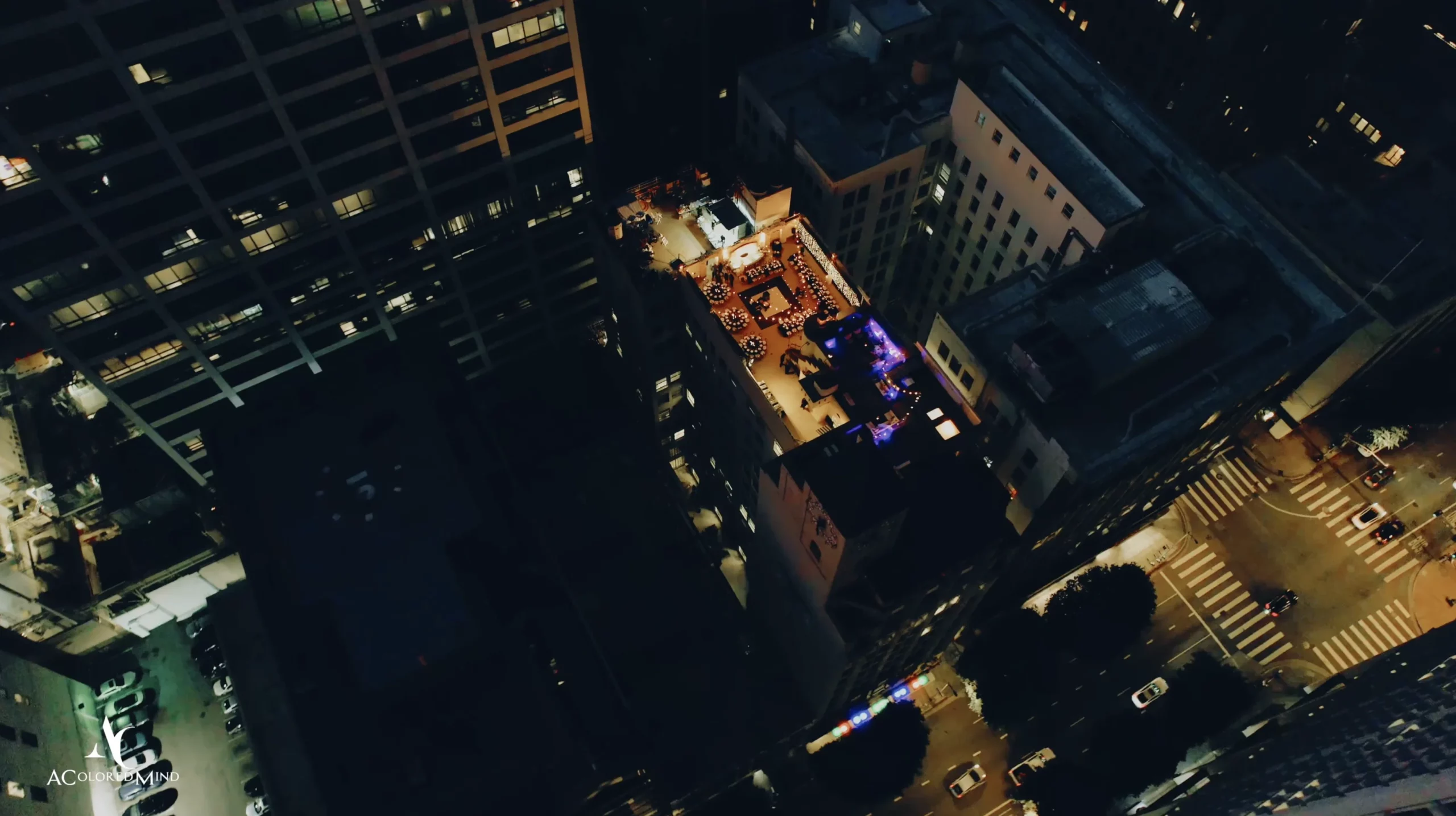
My approach is to prepare carefully before the wedding, observe constantly while I am filming, and still leave enough freedom to improvise when the light, location, people, or even Downtown LA traffic gives me something unexpected. Couples comparing Downtown Los Angeles venues may also want to explore an Oviatt rooftop wedding in DTLA, where the experience shifts from Millwick’s Arts District setting to historic interiors and an open rooftop overlooking the city skyline.
That combination is what made Amelia and Maria’s Millwick wedding film feel like theirs rather than simply another wedding filmed at the same venue.
📞 CALL OR TEXT:
213-999-8966
Cinematic and inclusive LGBTQ+ Wedding Videographer based in Los Angeles & Southern California. Capturing love stories in Orange County, Temecula, Palm Springs, Long Beach, San Diego, Las Vegas, Malibu, Santa Barbara, and across the globe.